What Republicans are Thinking
On Iran, Trump, 2026 and Beyond: My Q&A with the New York Times

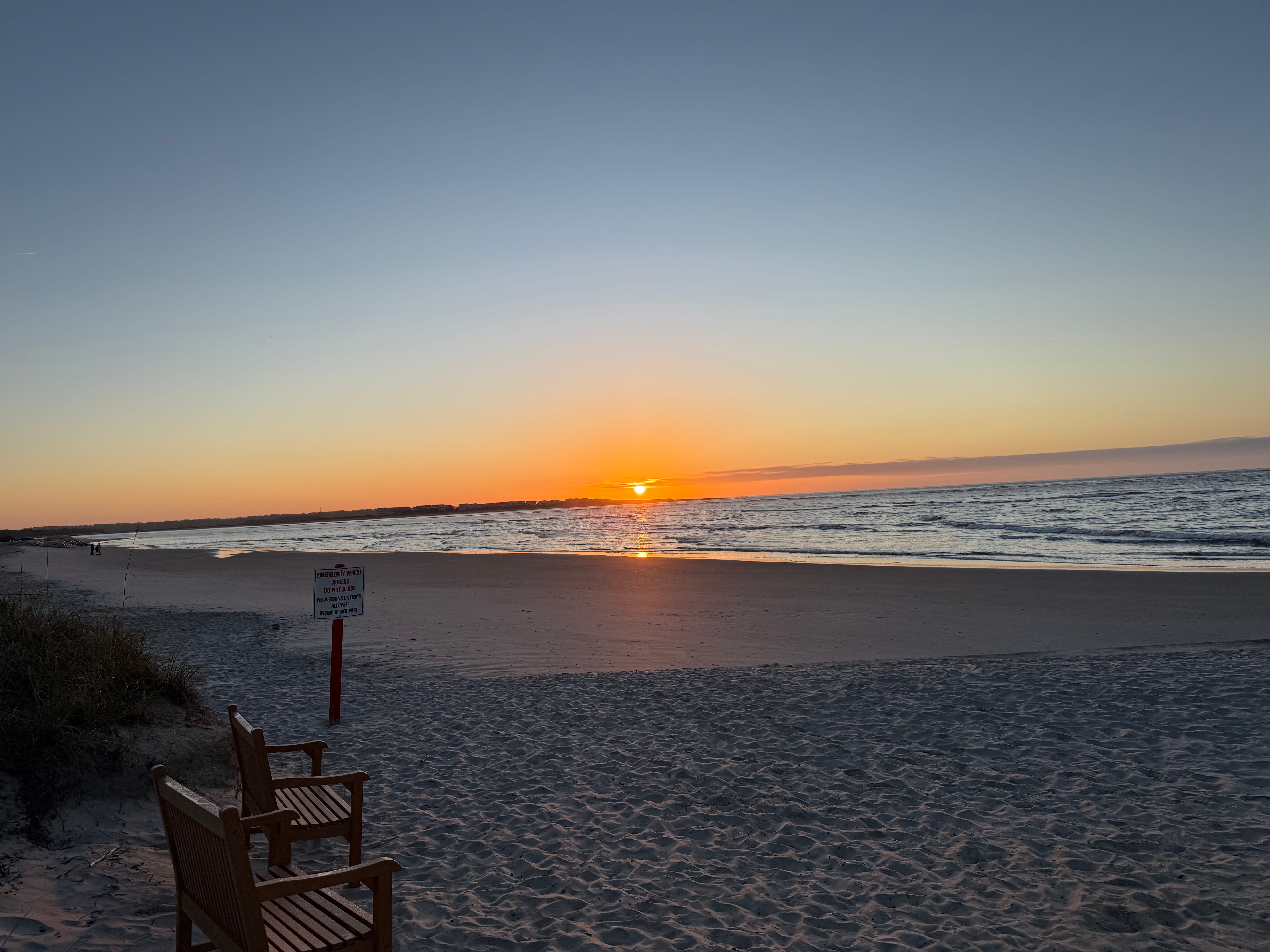
Greetings from sunny Ocean Isle Beach, NC, where the Donovan clan is riding out Spring Break. Yesterday I took a break for a poolside chat with New York Times opinion editor John Guida, who was looking for an inside take on the mood among Republicans heading into November. Having been unplugged for the past six weeks, my perspective is less oriented by the online hive mind than it otherwise might be. And while I have been derelict in this space over the same period, the forgiving format of Q&A—the lazy man’s oped—was too good to pass up. What was published is a lightly trimmed version of our real-time conversation. (Sadly no OIB dateline.)
Gift link to full piece here:
On what congressional Republicans actually think about the Iran war:
“The posture of the congressional G.O.P. reflects where their constituents are — instinctually wary of protracted involvement in the Middle East, uncertain as to exactly what our current objectives are in Iran and relieved by the cease-fire to the extent they are following closely. They’re eager to give this president the benefit of the doubt, and his willingness to speak out against previous misadventures gives him additional credibility in the near term even as it has confounded expectations.”
On whether the party’s devotion to one man is healthy:
“You have to remember that we got here precisely because the legacy G.O.P. was facially strong, winning enough elections for the establishment to maintain power, but rotting underneath in ways few could perceive other than Trump.”
On the midterm environment:
“A great presidential cycle like the one Republicans had in 2024 is a double-edged sword. It’s fun to win elections, it’s exhilarating to control the levers of power, but there’s inevitably an electoral hangover... Heading into November, the G.O.P. has three things going for it — a constrained House map, forgiving Senate terrain, and an unpopular Democratic Party going through an identity crisis of its own. The wild card is time; seven months is a political eternity, especially in the Trump era.”
On whether the One Big Beautiful Bill was really “Trumpy” policy:
“Remember that the chief imperative of that legislation was pre-empting a $4.6 trillion tax increase — one that was coming absent congressional action, and that the Biden-Harris plan would have almost certainly allowed families and businesses to absorb. So the reason it looks like Paul Ryan policy is that it was a Paul Ryan baseline. But the new tax policy ideas were very much in Trump’s image. As far as Trump’s signature issues, they were popular enough to get him elected — and have shown more political promise than stale G.O.P. policy tropes — but we’re seeing that execution is more complicated.”
On Republican retirements:
“There’s a tendency to point to retirements as proof of impending political doom — and I actually wrote a piece in 2018 about the exodus of committee chairs as a leading indicator — but the bipartisan nature of the phenomenon speaks to the fact that the House is not a fun place to be.”
On the structural problem Trump’s coalition creates:
“The most striking aspect of the coalition realignment that Trump has accelerated is that Republicans are now the party most reliant on low-propensity voters... the more people who vote, the better it is for the G.O.P.”
On 2028:
“In my mind the binary is order versus disorder. An orderly 2028, which is what I would expect at this point, is the conventional path where the vice president takes the mantle from a popular, term-limited president and romps to victory in a primary where would-be challengers read the writing on the wall and stay out. It’s not about JD Vance versus any particular candidate — if it’s not JD Vance, it’s a free-for-all.”
Read the full conversation at NYT Opinion.
Indeed... "legacy GOP" ripe for a hostile takeover: “You have to remember that we got here precisely because the legacy G.O.P. was facially strong, winning enough elections for the establishment to maintain power, but rotting underneath in ways few could perceive other than Trump.”
Insightful and well reasoned.